



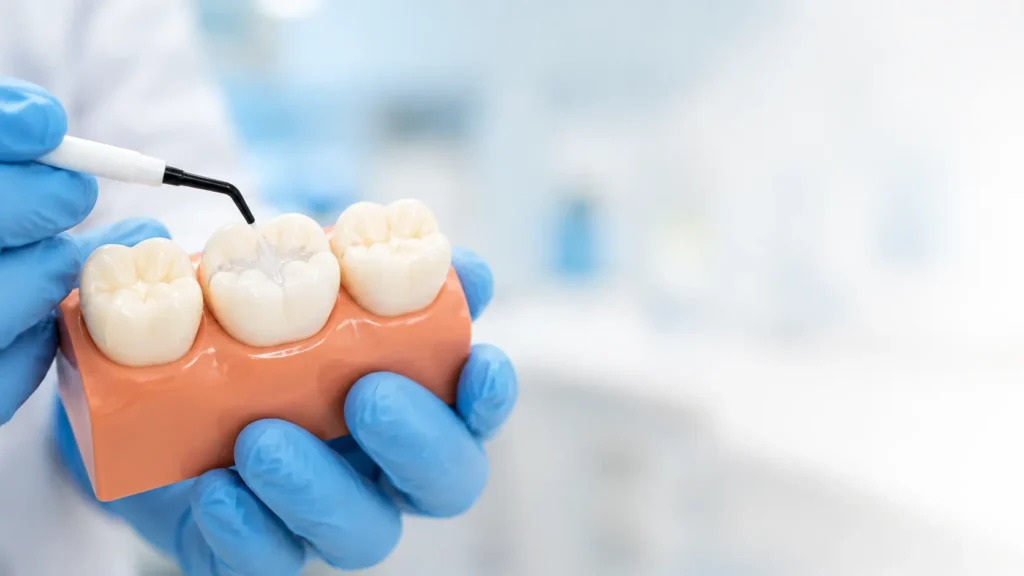

What Is the Purpose of Sealants?
Sealants protect the most cavity-prone areas of the mouth. Back teeth naturally contain grooves that are difficult to clean, even with daily brushing and flossing. A tooth sealant seals these grooves so cavity-causing bacteria cannot reach the enamel.
This significantly reduces the risk of tooth decay, especially in children.
Who Needs Dental Sealants?
- Children ages 6–14 with newly erupted molars
- Teens with deep grooves or a history of cavities
- Adults with cavity-prone molars or no previous fillings in those teeth
- Young children with baby teeth that have deep pits
Benefits of Dental Sealants
- Strong protection against cavities
- Prevents food and bacteria from settling into deep grooves
- Painless, quick, and non-invasive
- Suitable for both children and adult
Do I Have to Prepare for Sealants?
- No special preparation is needed.
- Your dentist will clean and dry the tooth before the sealant is placed, ensuring optimal bonding and long-lasting result
How Are Dental Sealants Applied?
- The dentist thoroughly cleans the tooth.
- The liquid dental tooth sealant is applied to the chewing surface.
- The tooth is dried, and cotton is placed to maintain dryness.
- A gentle etching gel prepares the enamel for bonding.
- The tooth is rinsed and dried again.
- A curing light hardens the material within seconds.
Are There Disadvantages?
- Sealants must be monitored for wear
- Not suitable for teeth with existing fillings or decay
- If improperly placed, bacteria may get trapped
- They may wear down over time with chewing