



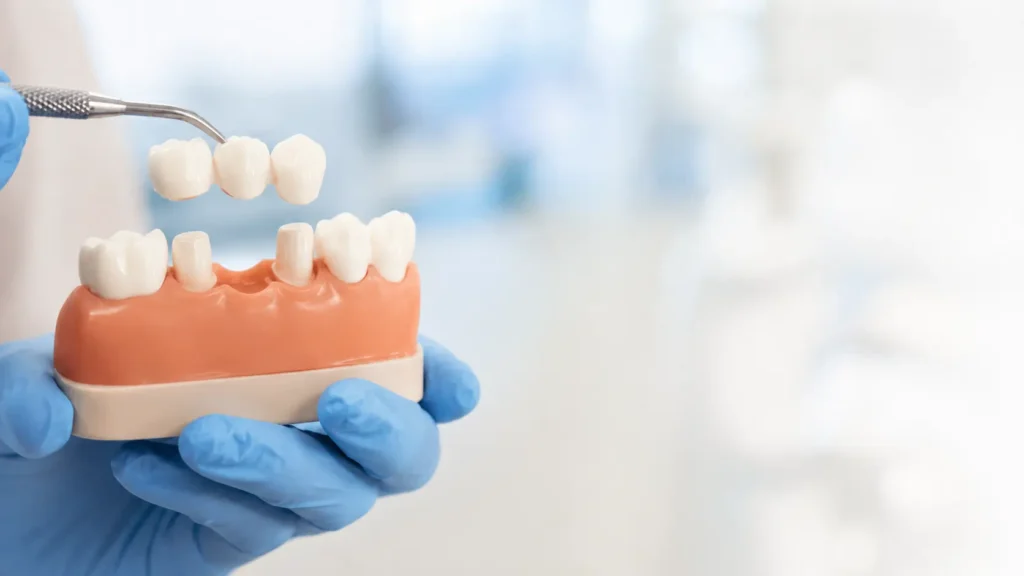

What Happens During a Dental Bridge Procedure?
Traditional or Cantilever Bridge
- The supporting teeth are reshaped to hold crowns.
- Impressions or digital scans are taken to design your bridge.
- A temporary bridge is placed while your custom restoration is made.
- On your final visit, the bridge is checked for fit, bite, and color, then permanently cemented.
Implant-Supported Bridge
- Dental implants are surgically placed in the jawbone.
- After healing and integration, the bridge is attached to the implants for a secure, permanent result.
- Our Vaughan team ensures comfort and precision at every step for a natural, long-lasting outcome.
Risks and Benefits of Dental Bridges
Advantages of Dental Bridges:
- Restore your natural chewing and speaking ability
- Prevent remaining teeth from shifting
- Maintain facial shape and balance
- Provide durable, fixed tooth replacement
- Improve confidence with a natural-looking smile
Disadvantages of Dental Bridges
- May require reshaping of healthy supporting teeth.
- Bridges can loosen or wear over time.
- Do not prevent bone loss like implants do.
- May need replacement after several years.
What Does a Dental Bridge Cost?
On average, dental bridge prices in Vaughan range from $1,500 to $4,500, depending on materials and structure.
We offer direct insurance billing and flexible payment options to make your treatment affordable.
- Number of missing teeth
- Material type (porcelain, zirconia, resin, or metal alloy)
- Placement complexity
- Geographic location and lab fees
Why Do I Need a Dental Bridge?
Missing teeth can cause more than cosmetic issues. They can affect your bite, oral health, and confidence.
- Restoring your natural smile and facial support
- Allowing proper chewing and speech
- Distributing chewing forces evenly
- Preventing other teeth from drifting into the gap
Replacing missing teeth early helps protect your remaining natural teeth and preserve overall oral health