



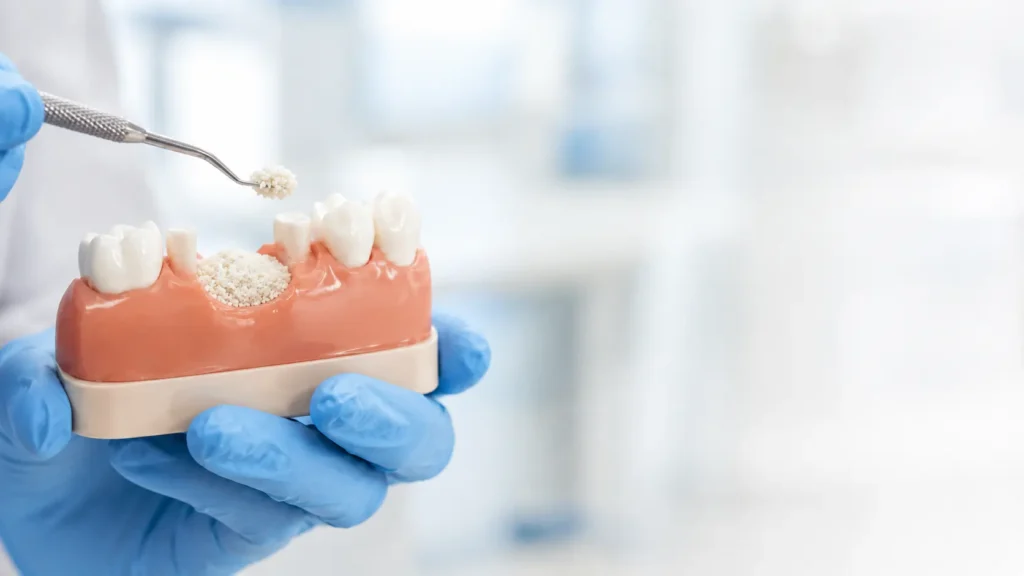

Why Is a Bone Graft Needed Before Dental Implants?
Dental implants rely on a solid jawbone to anchor securely. If there isn’t enough width, height, or density of bone, the implant may not integrate properly.
A dental bone graft in Vaughan may be recommended to:
- Prevent bone collapse after a tooth extraction
- Stabilize loose teeth
- Restore facial structure and prevent sunken features
- Increase bone height near the sinuses
- Prepare the jaw for dental implant placement
Most patients who are not initially candidates for implants can qualify after Bone Grafting.
How Much Bone Is Needed for a Dental Implant?
Generally, at least 1 mm of healthy bone must surround the implant on all sides. If the bone is thin, shallow, or too soft, a graft is required before implant placement.
In the upper jaw, bone height can be limited by the sinus cavity, often making a sinus lift necessary.
Types of Bone Graft Materials Used
We offer several graft material options based on your health, needs, and treatment goals:
- Autograft: your own bone (most predictable)
- Allograft: human donor bone
- Xenograft: animal-derived bone (usually bovine)
- Alloplast: synthetic biocompatible material
Your dentist will select the best material for your specific case.
What to Expect During the Dental Bone Graft Procedure
Most Bone Grafting procedures are straightforward and performed under local anesthesia or sedation for your comfort.
Treatment steps include:
- Thorough examination and CBCT 3D scan
- Local anesthesia or sedation
- Incision to access the bone
- Placement of grafting material
- Membrane placement (if required)
- Suturing and healing instructions
Most patients experience little to no discomfort during the procedure.